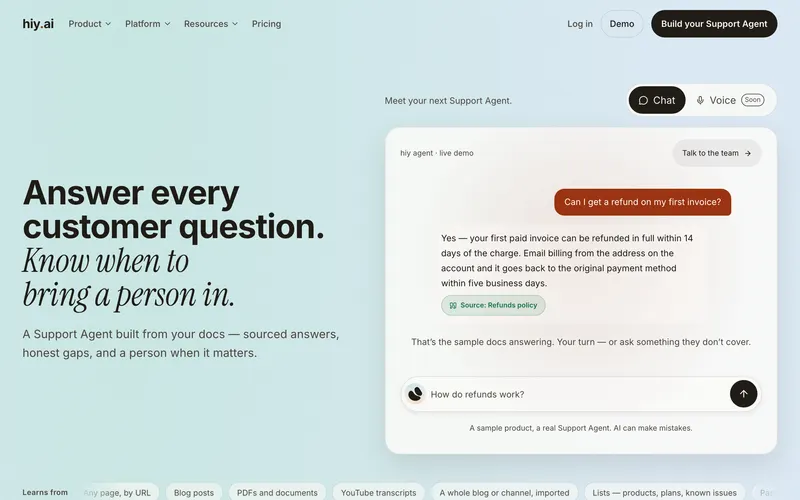
Build a Support Agent from your product docs. hiy.ai answers with the source attached, admits gaps, and hands unanswered questions to your team.
AI Agents & AssistantsFreemium
15 developer tools in this category
Agent frameworks, coding assistants, and the memory, tool-calling and sandbox infrastructure they run on.
An agent is a model given tools and a loop: it decides what to call, reads the result, and decides again. Almost everything in this category is one of two things — a framework for writing that loop, or a piece of infrastructure the loop needs. Separating those two is the first useful distinction, because the frameworks compete with each other and the infrastructure mostly does not.
The frameworks differ less in what they can express than in how much they hide. Thin libraries leave orchestration, retries and state to you and stay easy to debug when a run goes wrong. Higher-level builders get a working agent faster and are harder to reason about at 2am. Visual builders trade both for accessibility to people who will not be reading a stack trace at all.
The infrastructure half is where the practical problems live: giving an agent a sandbox so generated code cannot touch your machine, giving it durable memory across sessions, letting it browse the real web, and authenticating it against third-party APIs without handing it your credentials. These are unglamorous and they are usually what determines whether an agent survives contact with production.
Coding assistants sit slightly apart. They are agents, but the loop is wrapped in an editor and the evaluation is subjective — whether it fits how you work matters more than any benchmark, which is why this is a category worth trying rather than reading about.
Build a Support Agent from your product docs. hiy.ai answers with the source attached, admits gaps, and hands unanswered questions to your team.
Just-in-time tool calls, secure delegated auth, sandboxed environments, and parallel execution across 1,000+ apps.
Dify is the platform for production-ready agentic workflows. Build agents, knowledge pipelines, models, and tools on one canvas, deployable on Cloud, in your VPC, or self-hosted.
E2B Gives AI Agents Secure Computers with Real-World Tools. E2B is Used by 94% of Fortune 100 Companies for Frontier Agentic Workflows.
LangChain provides the engineering platform and open source frameworks developers use to build, test, and deploy reliable AI agents.
Langflow is a low-code AI builder for agentic and retrieval-augmented generation (RAG) apps. Code in Python and use any LLM or vector database.
LlamaParse is the world's best agentic OCR for processing complex documents with messy tables, charts, images, and more with human-level accuracy.
Mem0 enables AI agents & apps to continuously learn from past user interactions, enhancing their intelligence and personalization.
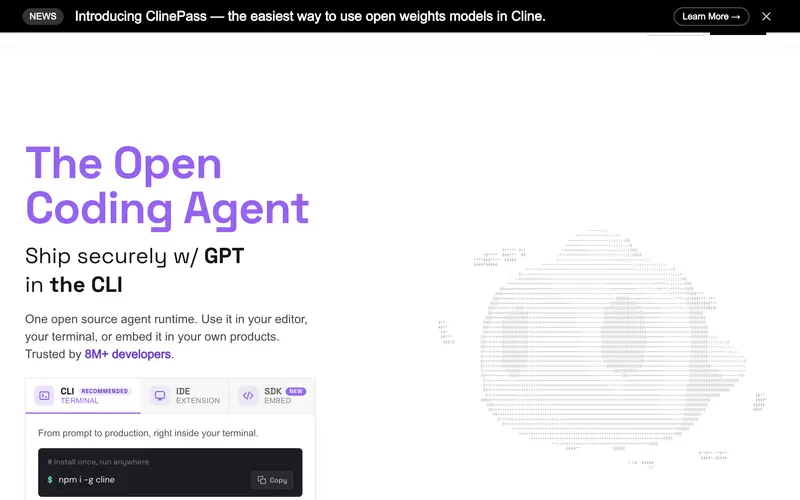
Open-source AI coding agent with Plan/Act modes, MCP integration, and terminal-first workflows. Trusted by 8M+ developers worldwide.
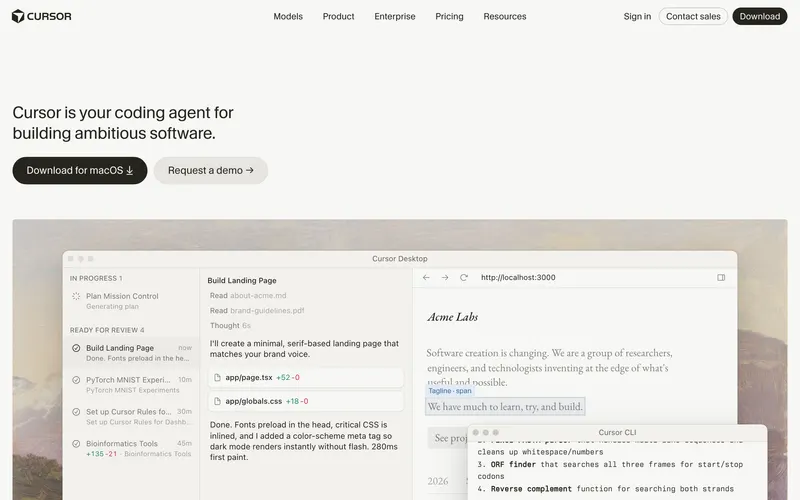
Built to make you extraordinarily productive, agents turn ideas into code. Accelerate development by handing off tasks to Cursor.
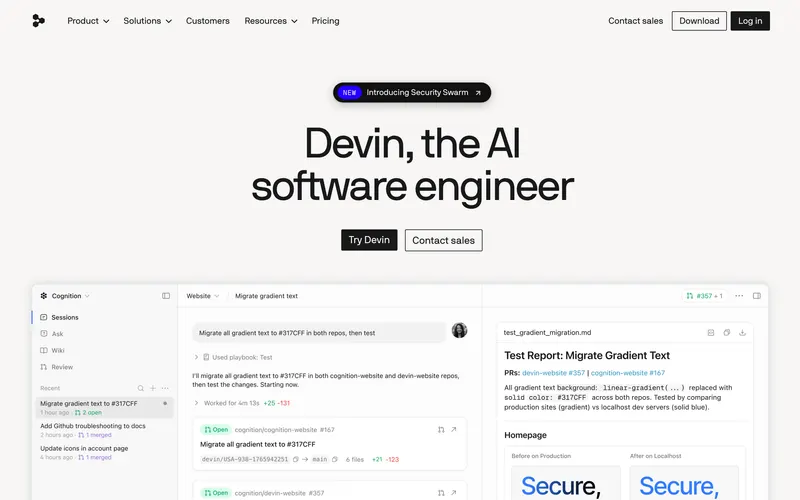
Devin is an AI coding agent and software engineer that helps developers build better software faster. Parallel cloud agents for serious engineering teams.
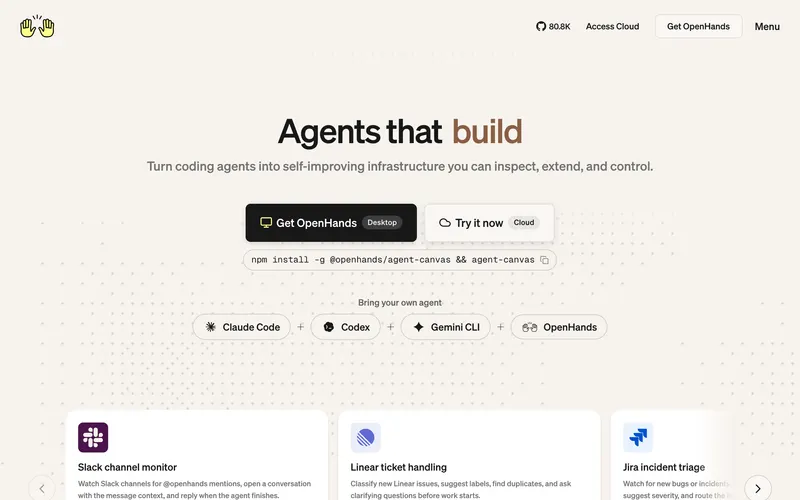
Meet OpenHands, the open-source, model-agnostic platform for cloud coding agents. Automate real engineering work securely and transparently. Build faster with full control.
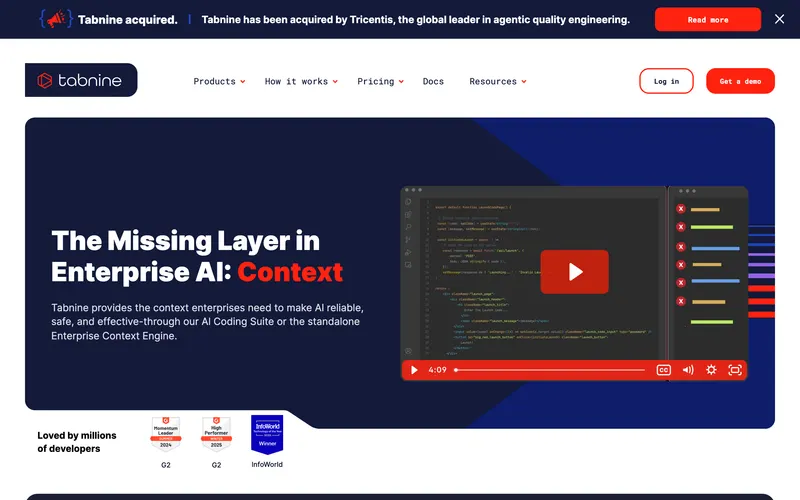
Tabnine is the AI code assistant that accelerates and simplifies software development while keeping your code private, secure, and compliant.
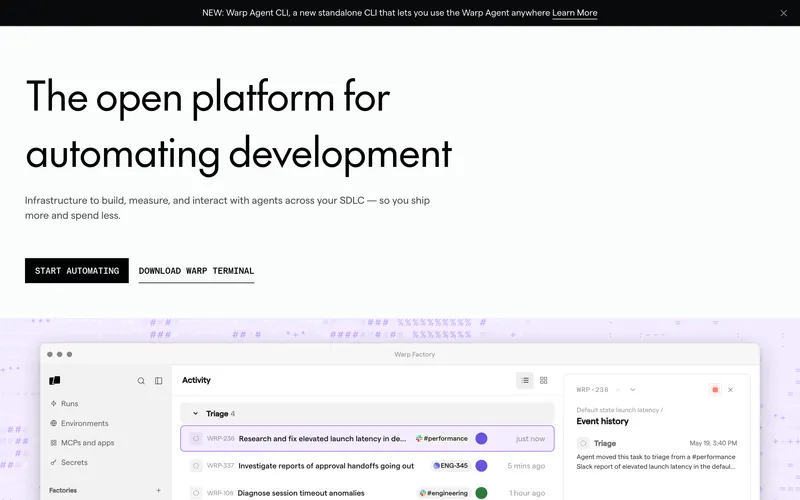
Warp is an open platform for building software with agents. Build cloud software factories with Oz, and build locally with Warp’s open source agentic terminal. Free to start.